Antares
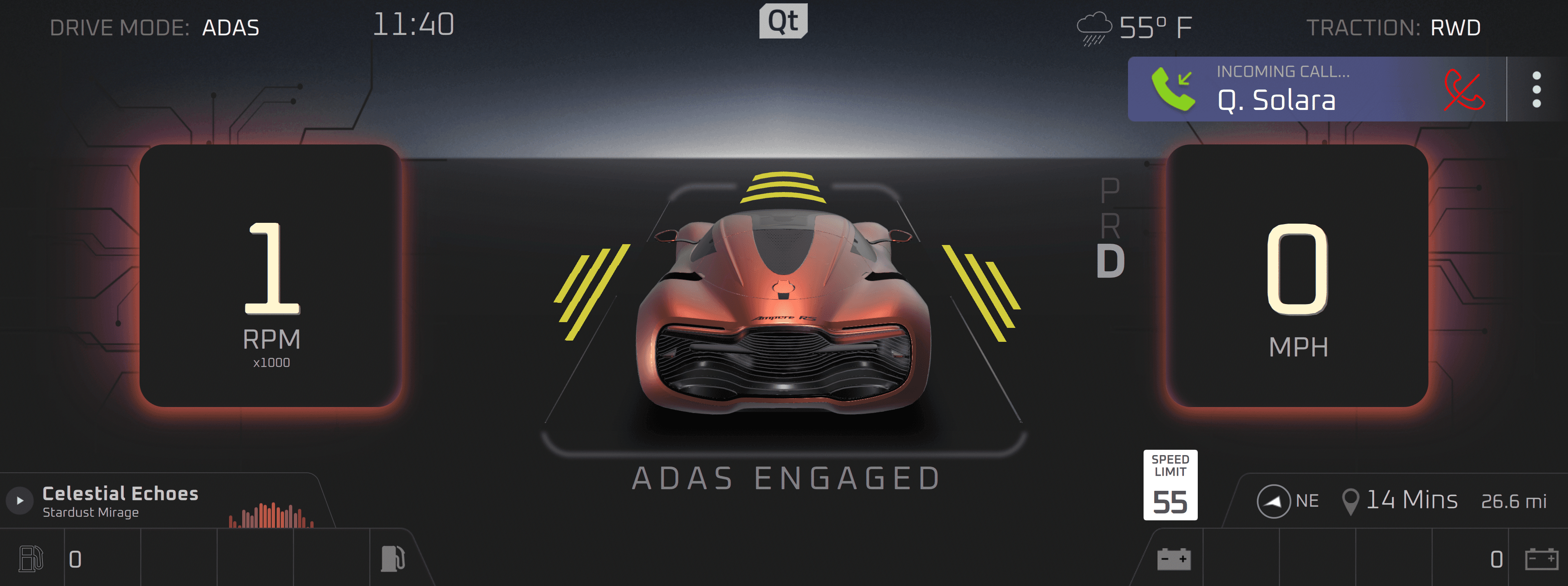
Project Antares is a bold automotive interface concept that treats the vehicle dashboard as a living, expressive system. Spanning the full cockpit from Instrument Cluster to In-Vehicle Infotainment, the experience reimagines how brand, mood, and personalization can shape the way drivers connect with their vehicles.
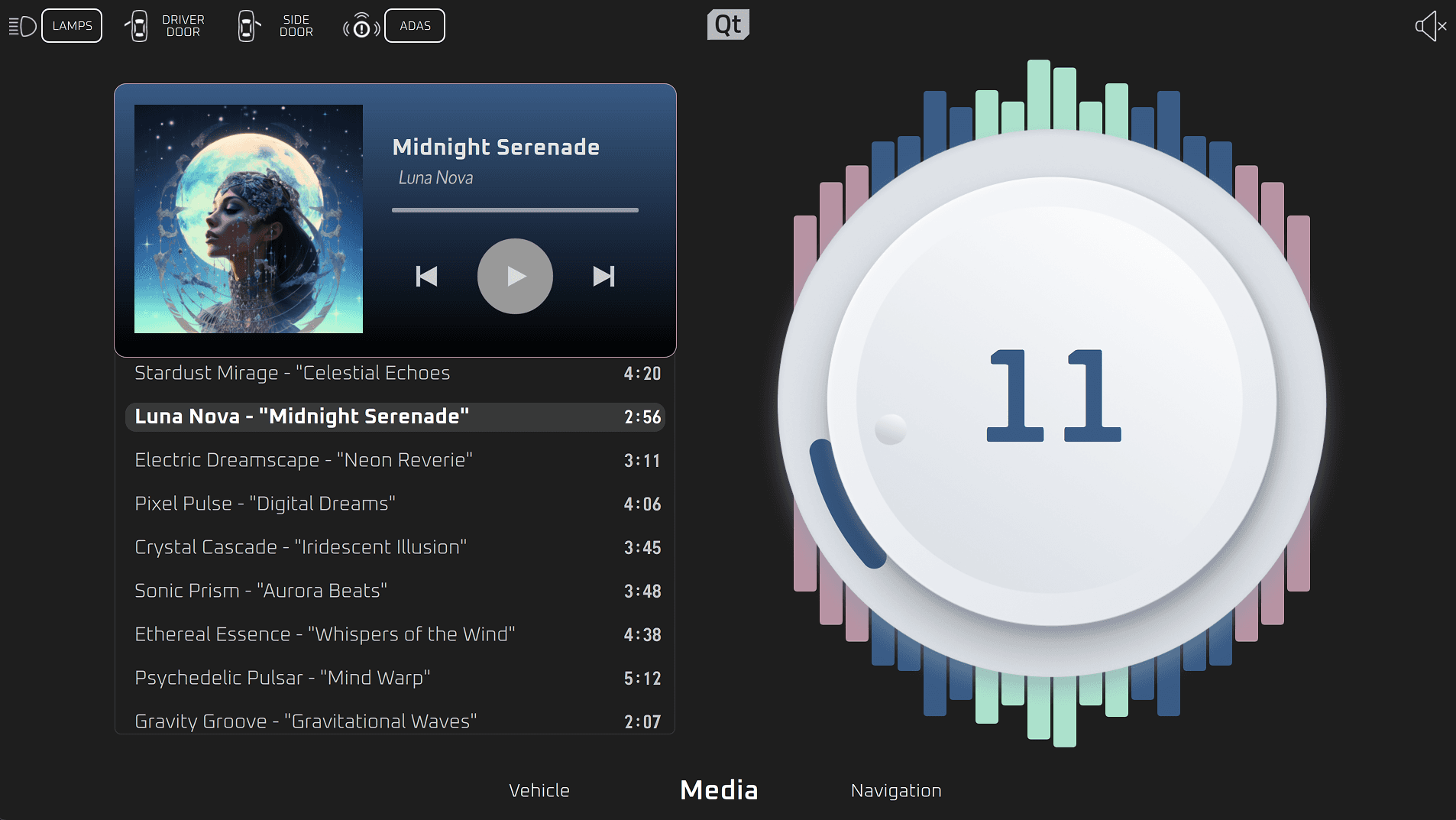
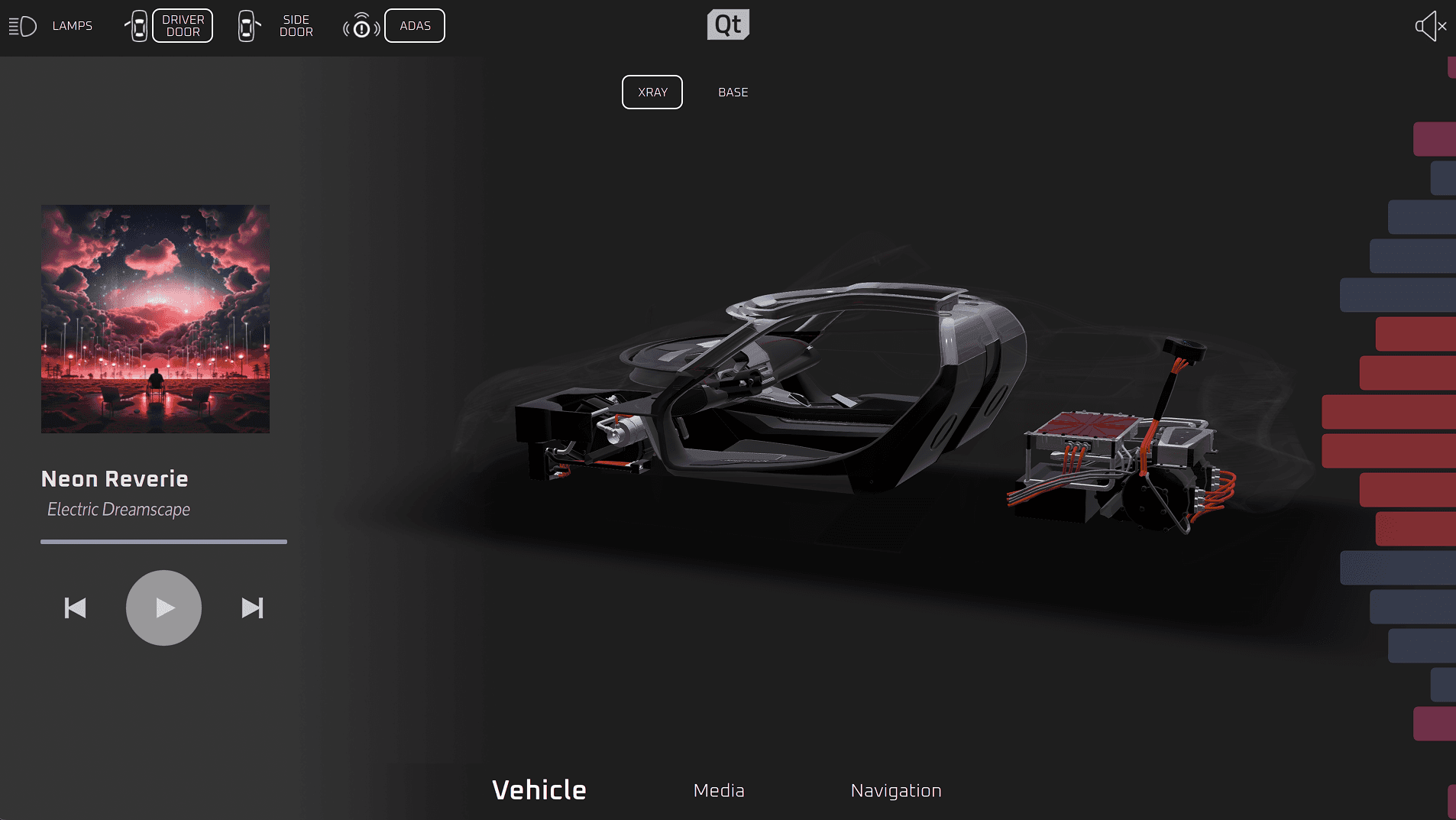
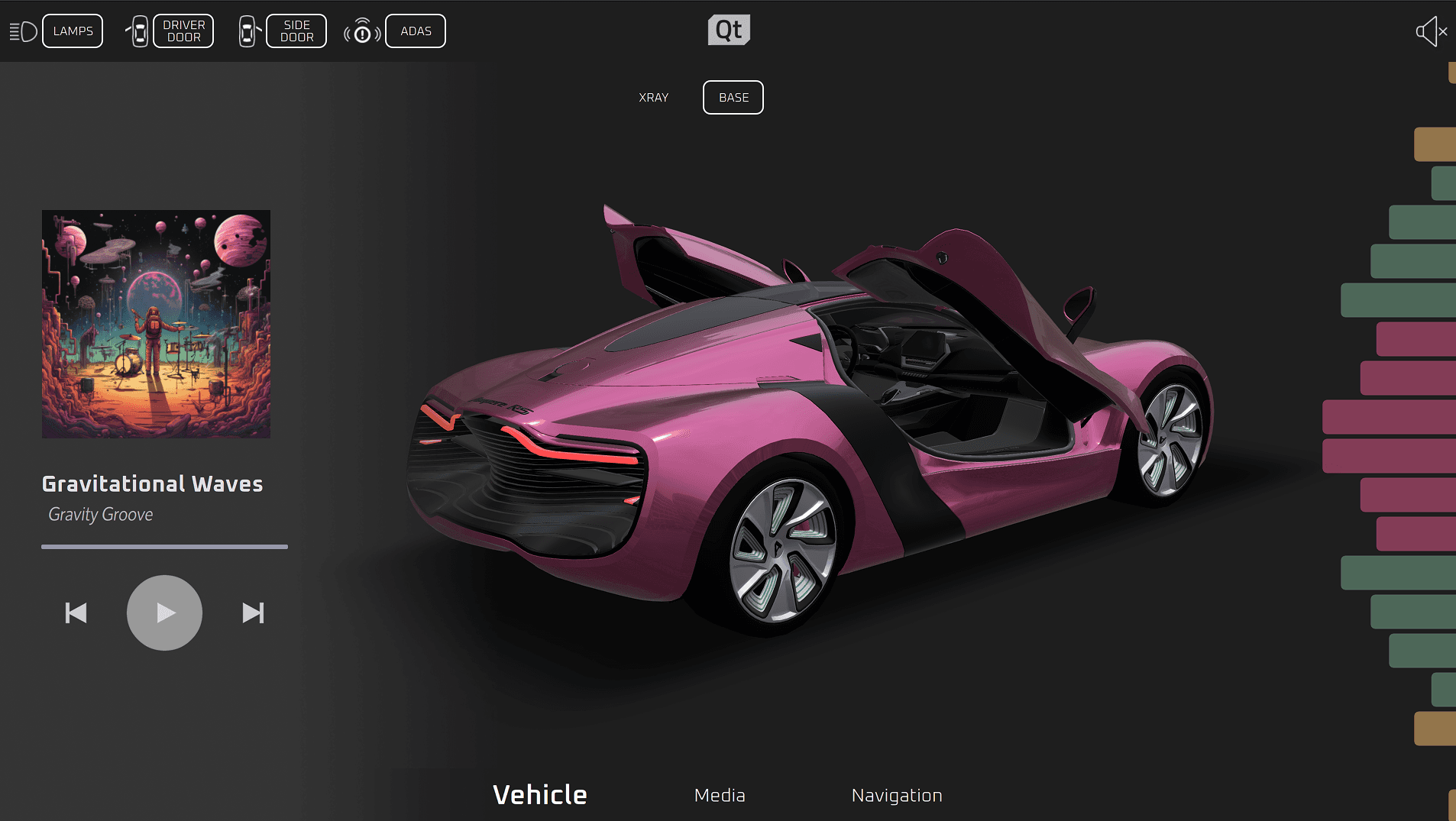
Rooted in a music-inspired theme engine, Antares transforms album artwork into dynamic visual identities. Each track introduces a new atmosphere, cascading color and style changes across both 2D interface elements and 3D vehicle paint surfaces in real time. The result is a cohesive, emotionally driven experience that demonstrates how modern theming systems can scale across an entire automotive UI without sacrificing performance, clarity, or control.
A Dashboard with a Soundtrack
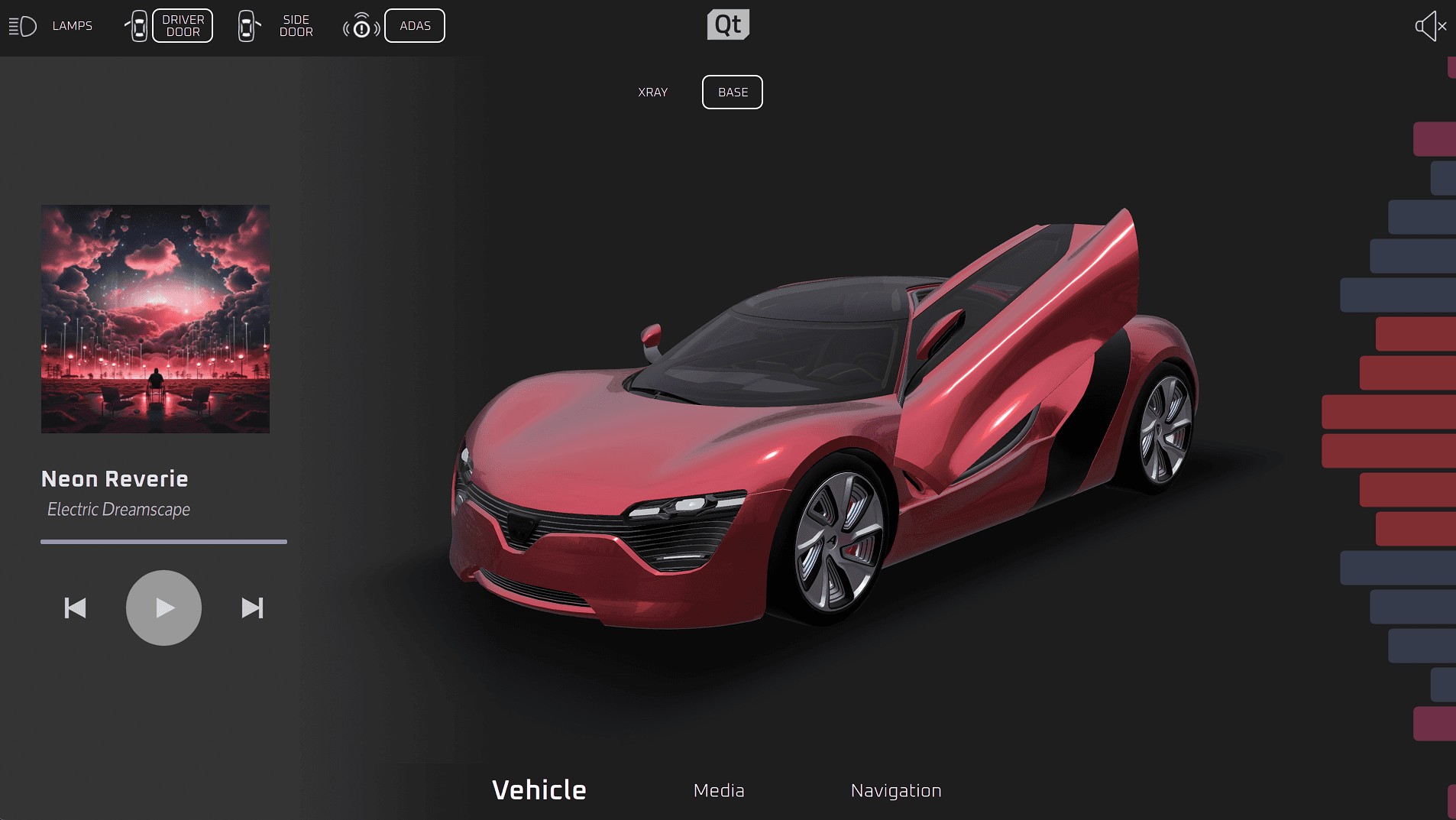
Project Antares treats the automotive dashboard like a playlist; dynamic, expressive, and constantly evolving. Inspired by the emotional pull of music, the interface responds in real time, transforming the look and feel of the entire cockpit with every track change.
By turning album artwork into living themes, Antares explores how personalization, brand identity, and system-wide design can come together to create an automotive experience that feels less like software.
All the Parts. One Performance.
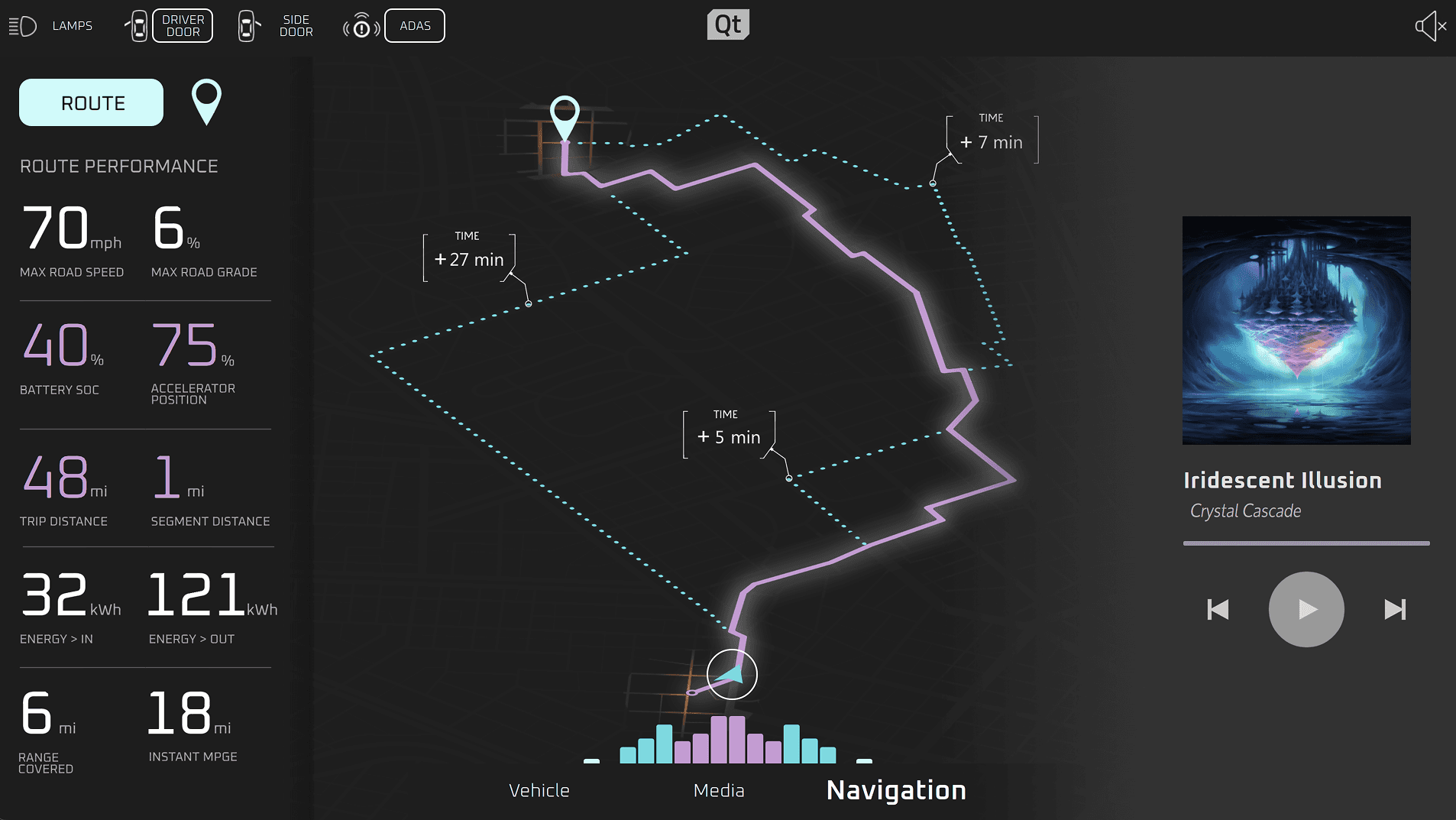
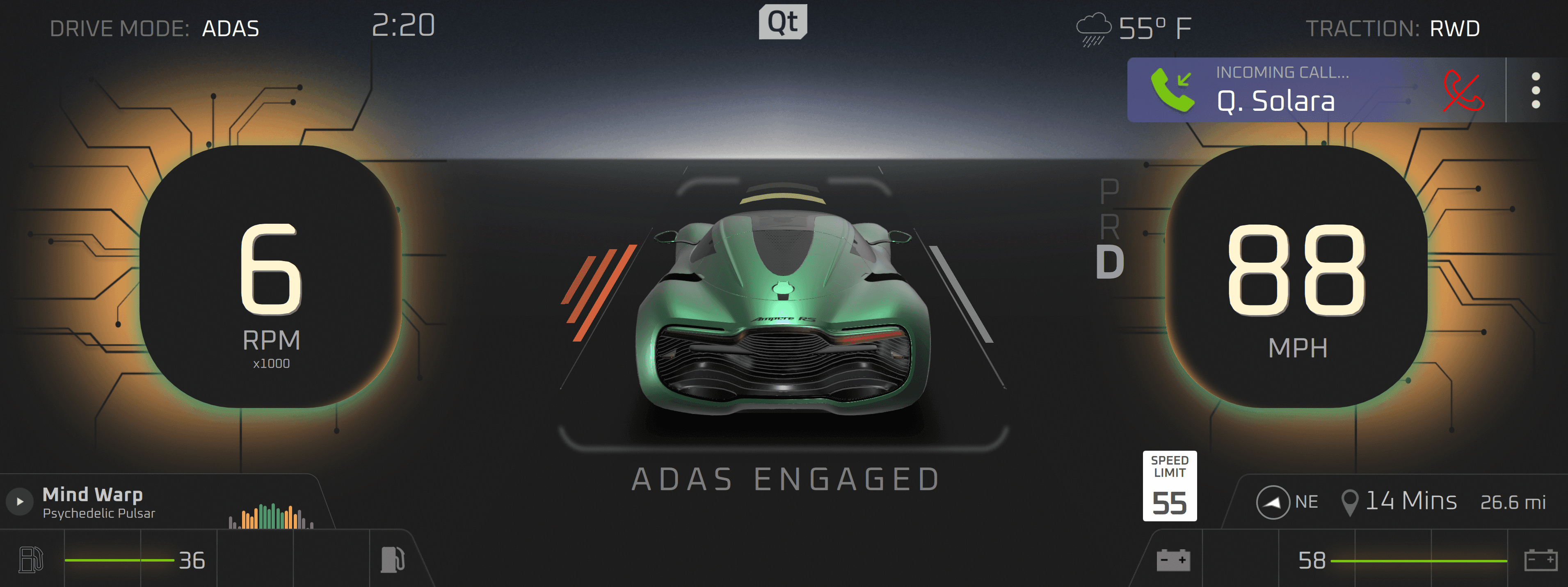
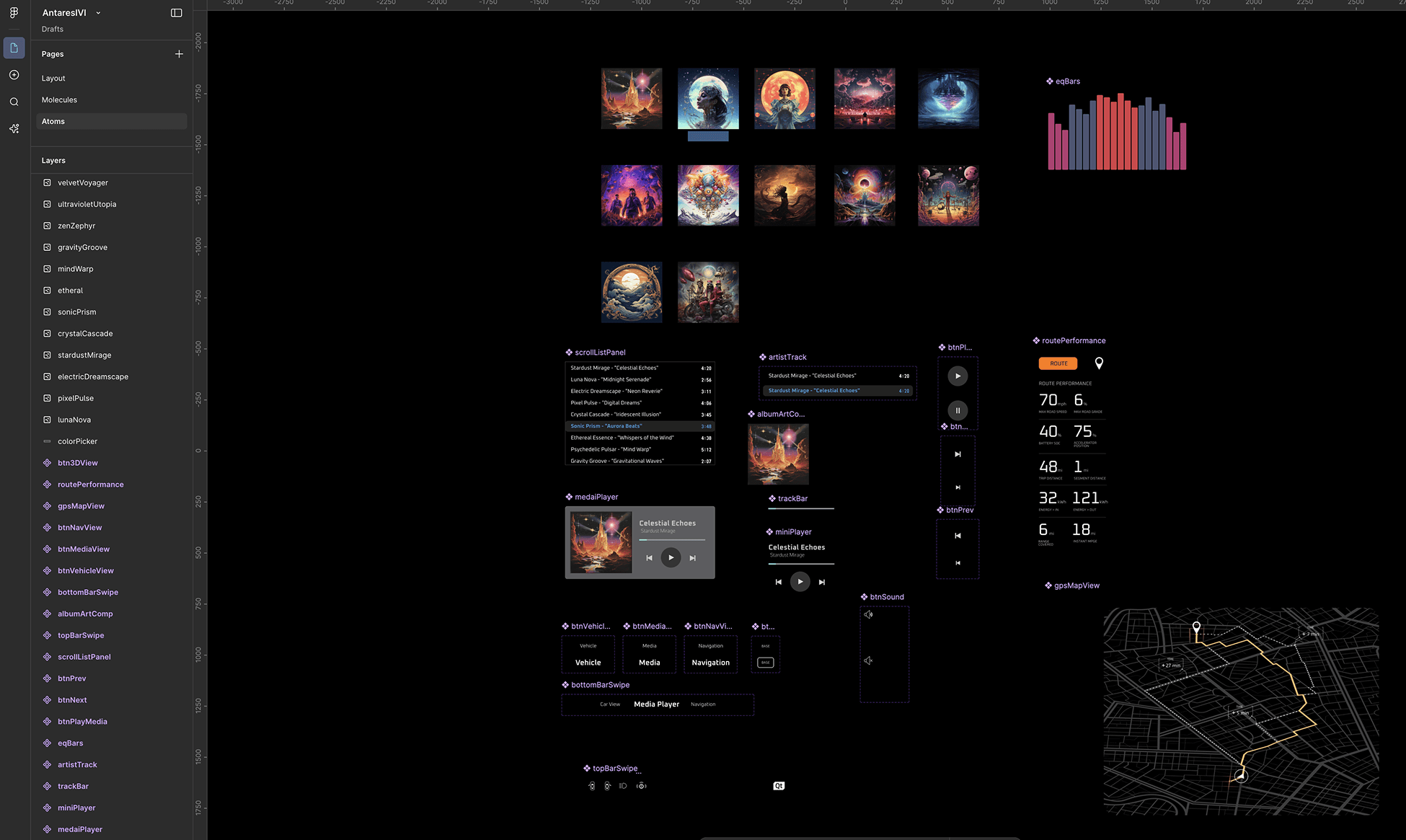
The project brings together carefully crafted 2D elements and 3D mesh objects into a unified design. Concepts & visual intent defined in Figma and the 3D mesh optimized in Maya are translated into a shared framework of styles, states, and motion ensuring consistent behavior, synchronized updates, and reliable performance across the entire cockpit experience.
Turning Vision into Opportunity
Project Antares proved that a well-defined design can move seamlessly from concept to implementation. The project established a clear handoff between design and development, aligning visual intent with real-world constraints and enabling faster, more confident execution.
As a result, Antares has been used as a reference example when engaging automotive OEMs, helping frame conversations around theming, personalization, and system scalability. More than a concept, it became a practical catalyst and opened doors to new discussions, demos, and opportunities for the business.