OxyScan
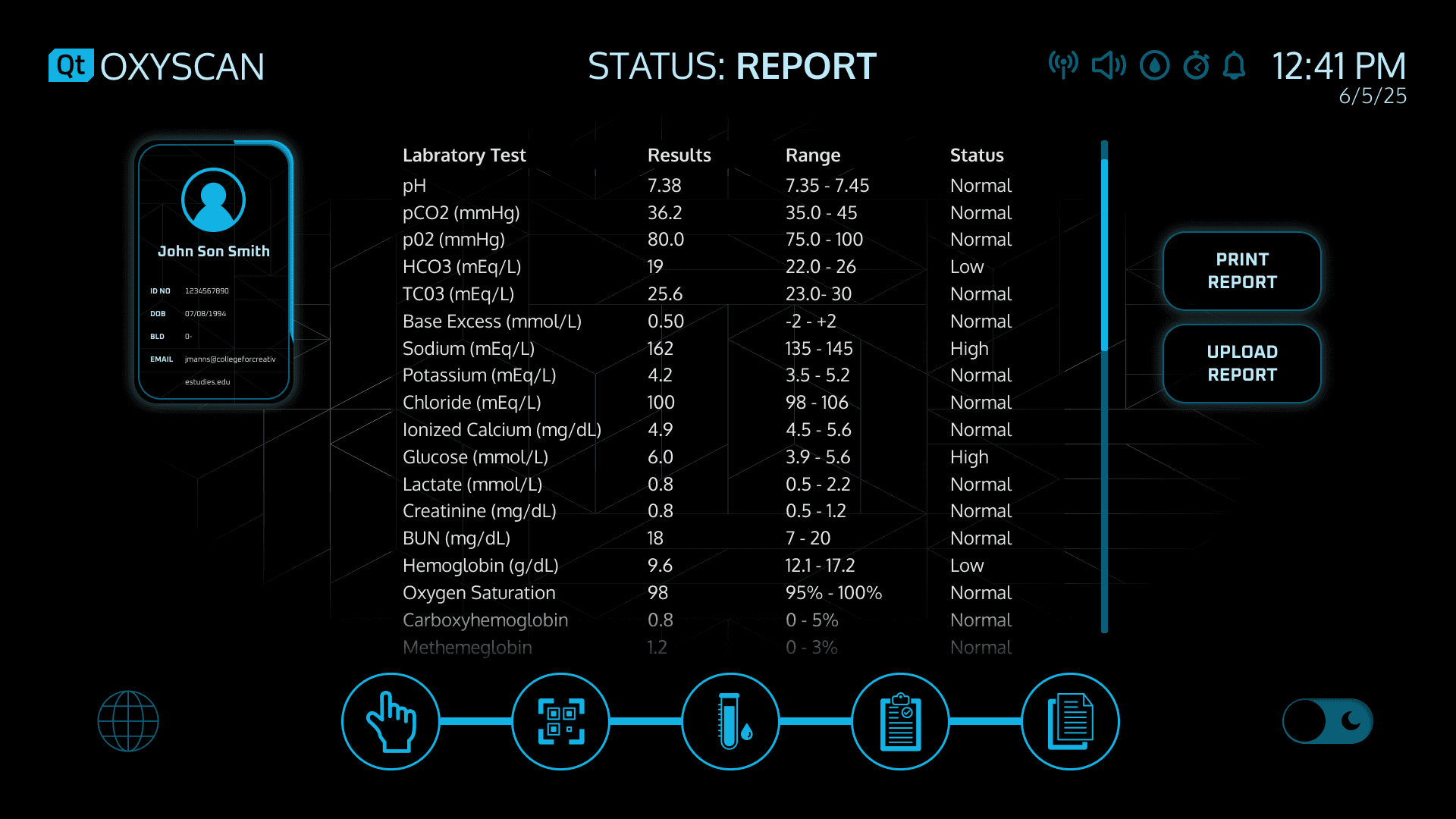
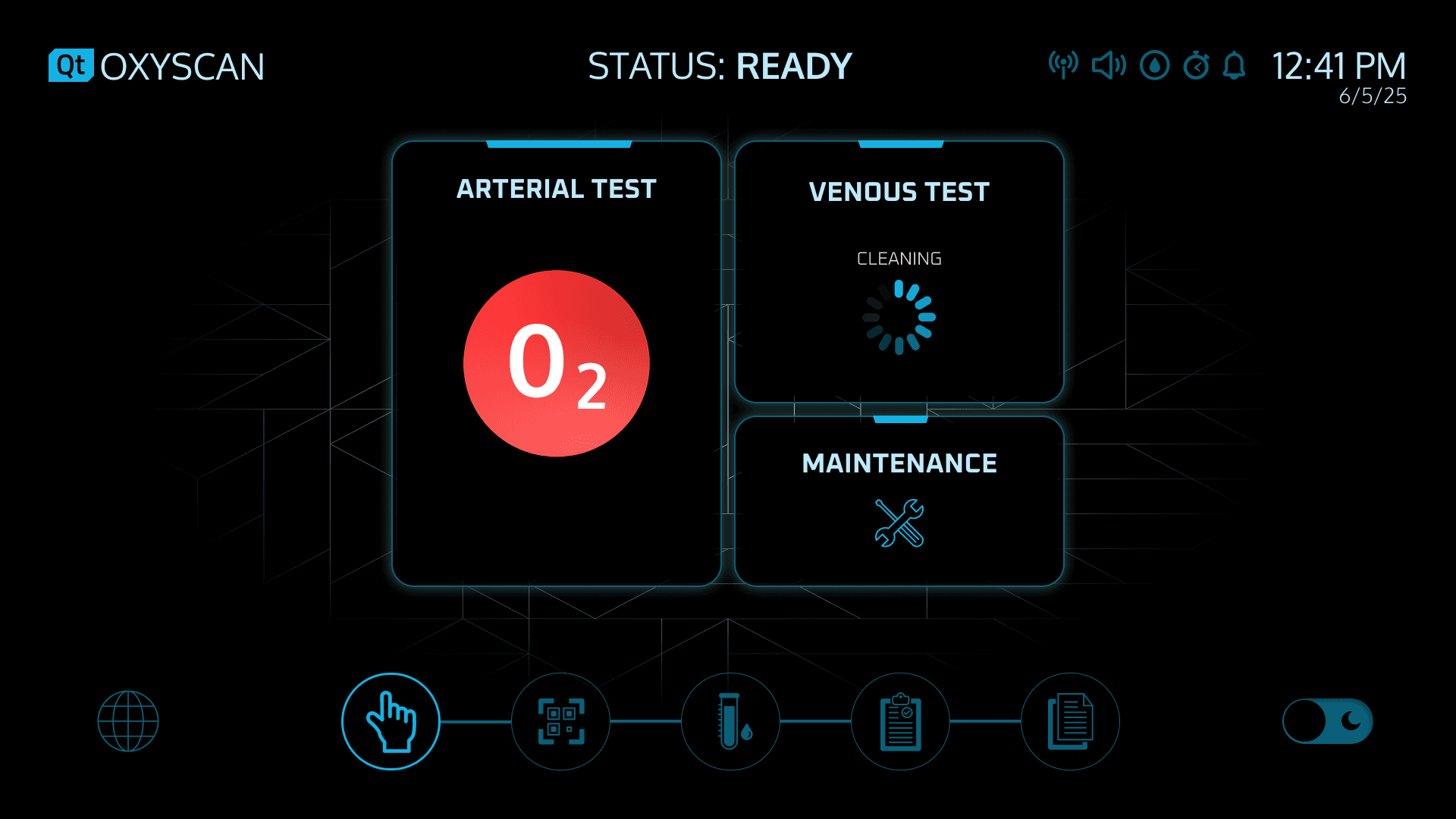
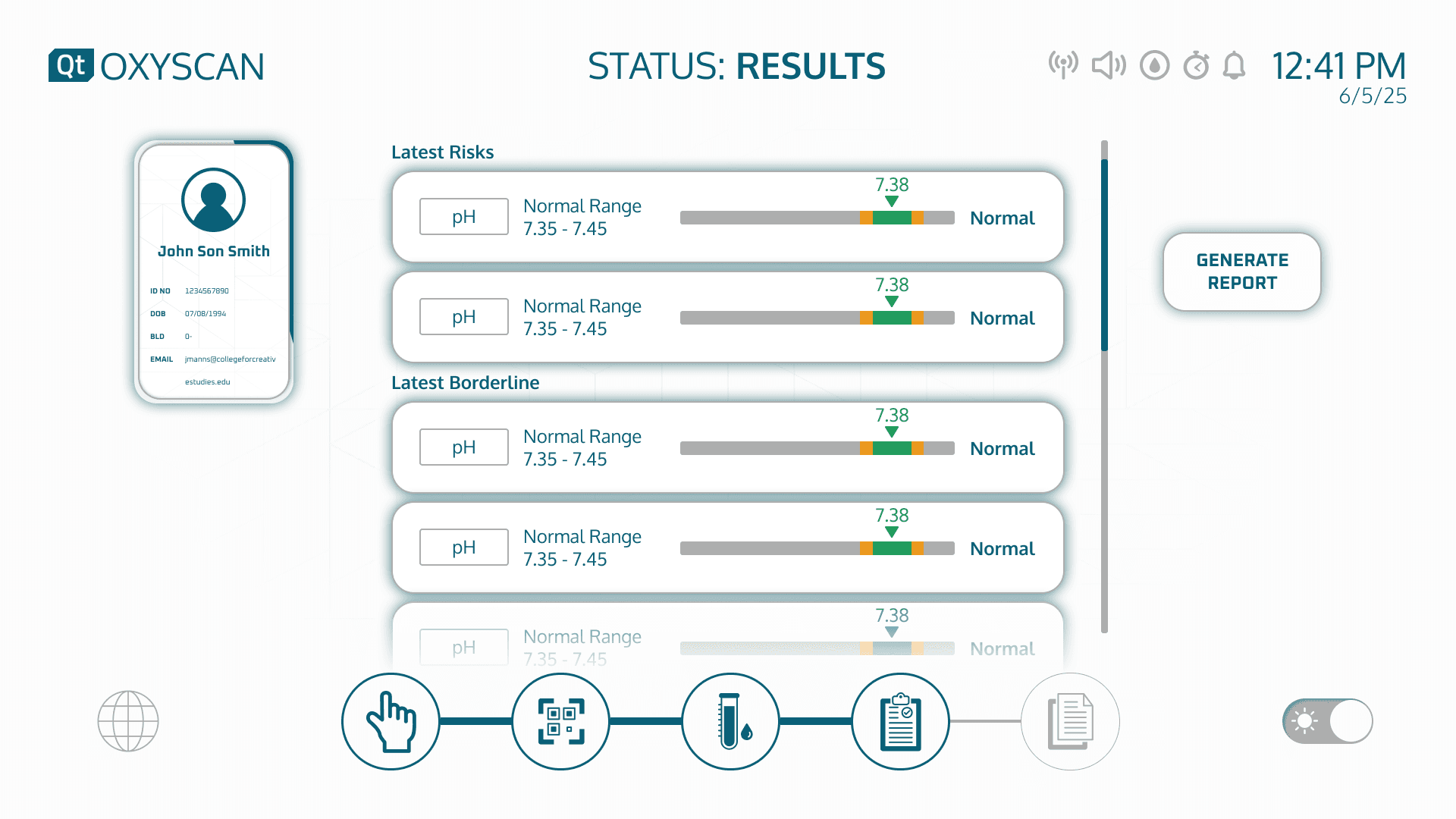
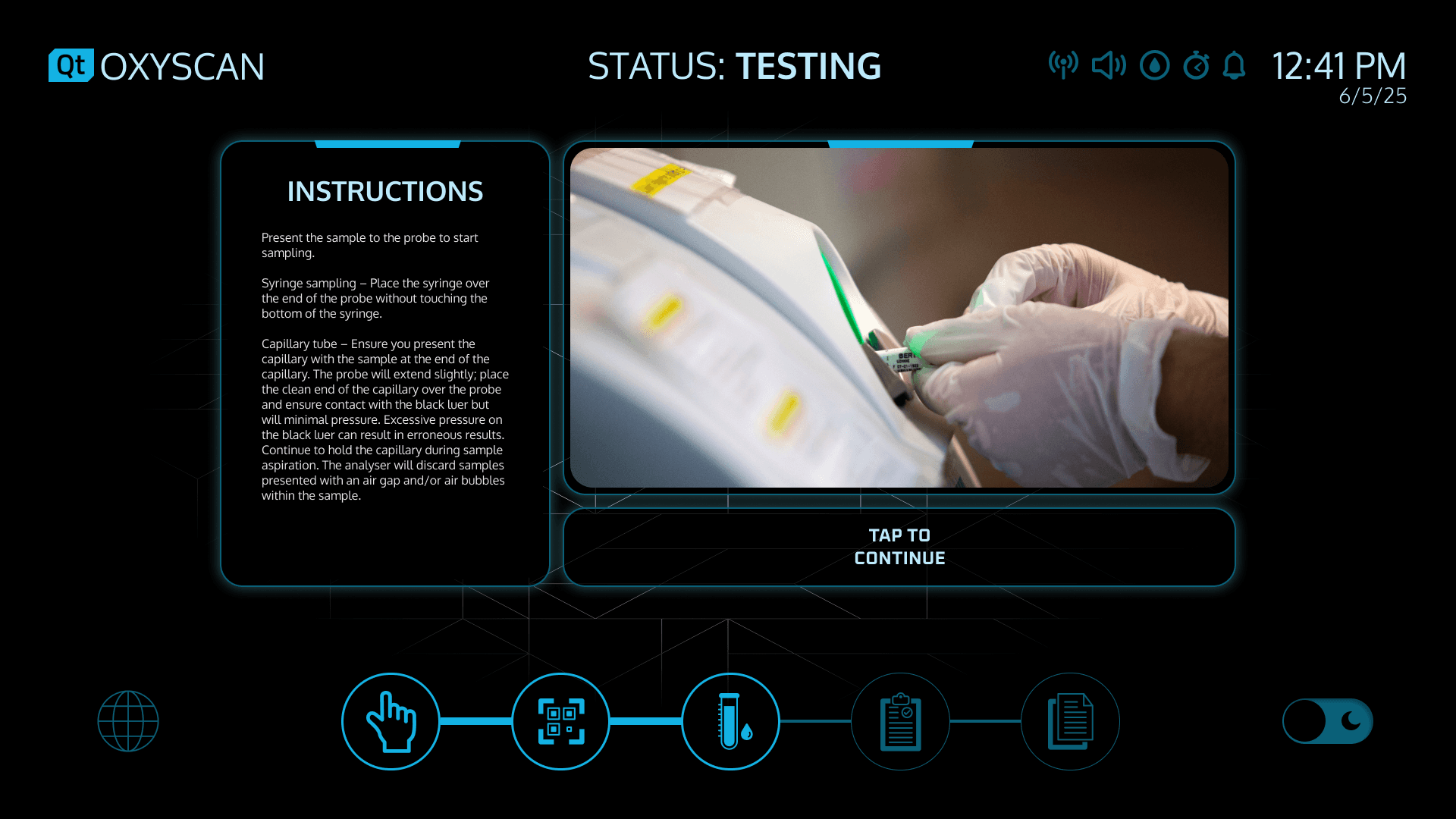
OxyScan is an interactive medical demo designed to expand the Qt healthcare portfolio beyond traditional device interfaces and into complete diagnostic workflows. The experience walks users through the full journey of collecting a blood sample, processing the test, and reviewing patient results; transforming a clinical procedure into a cohesive digital narrative.
Blending rich animations, multilingual support, embedded media, and physical QR integration, OxyScan demonstrates how modern medical interfaces can balance technical precision with intuitive usability. Built to run on target hardware in a Linux environment, the demo bridges conceptual design and production-aware execution.
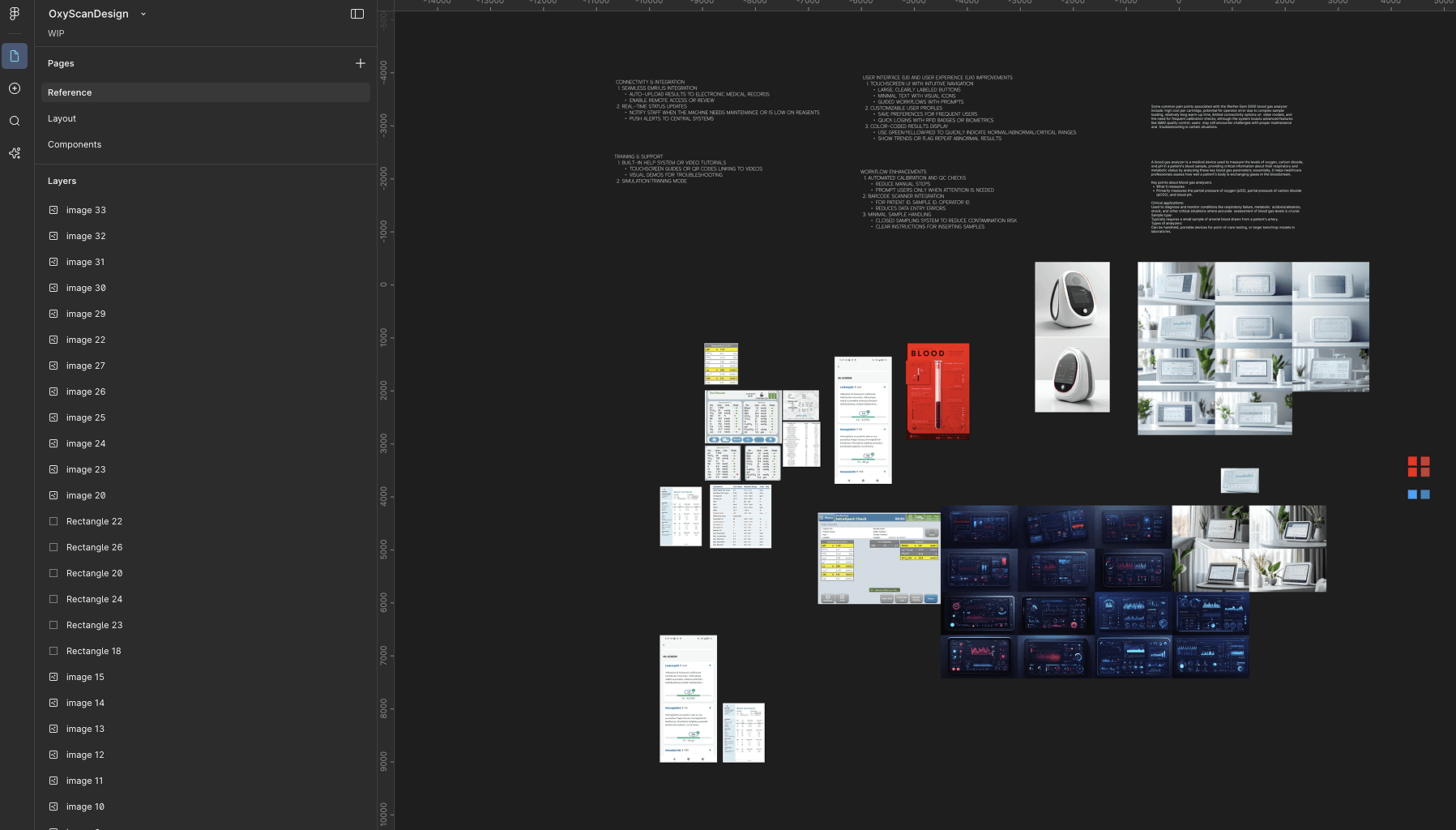
Clarity Under Pressure.
OxyScan was crafted to:
Expand Qt’s medical narrative into end-to-end workflow storytelling
Demonstrate rapid development and integration capabilities
Showcase multilingual adaptability and day/night modes for global deployment
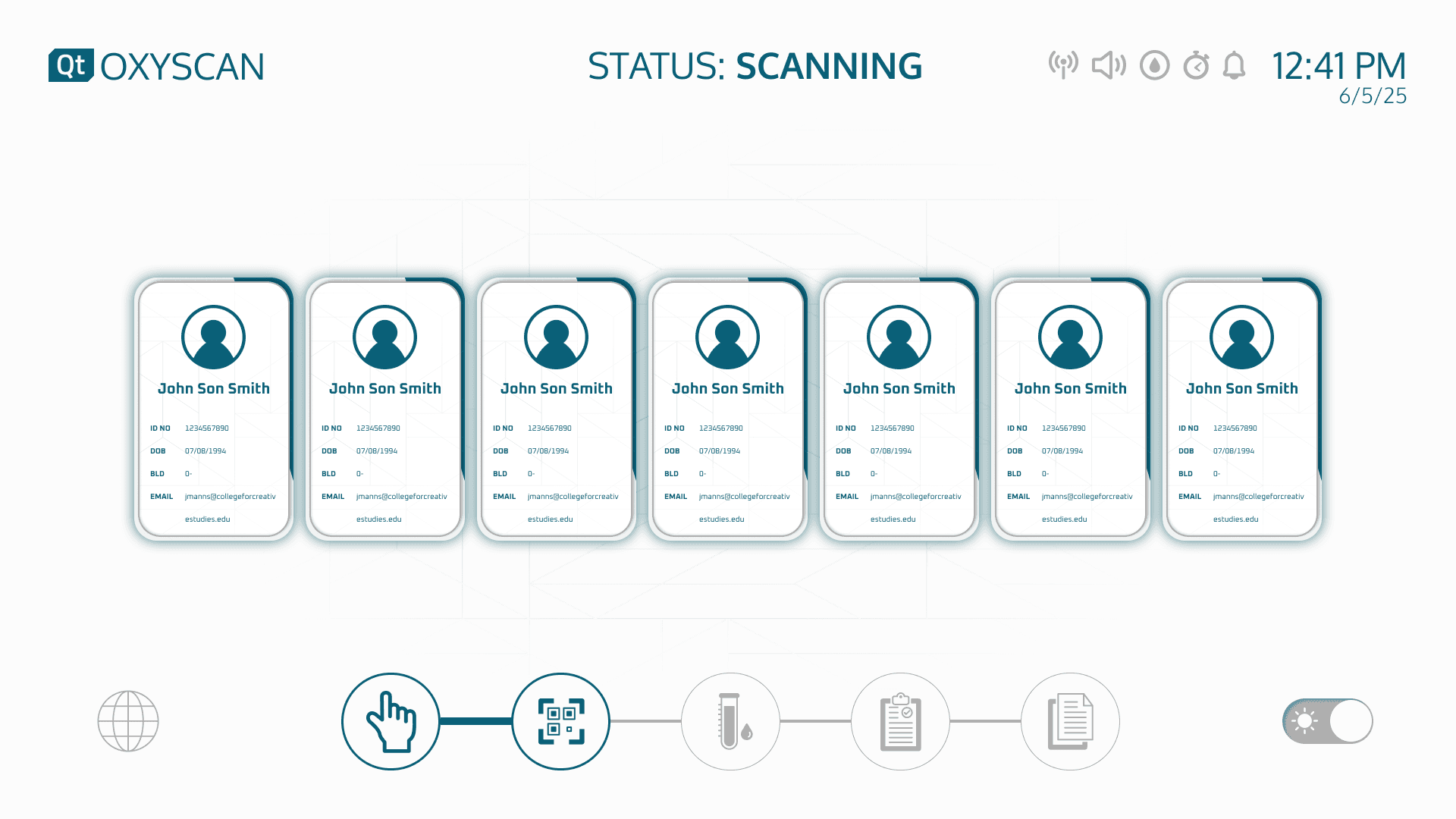
Integrate real-world interaction through QR-based patient intake
Integrate rich animations for engaging storytelling
Operate reliably on IMX95 hardware in a Linux environment
The goal was not simply to present features, but to convey readiness, empathy, and domain awareness.
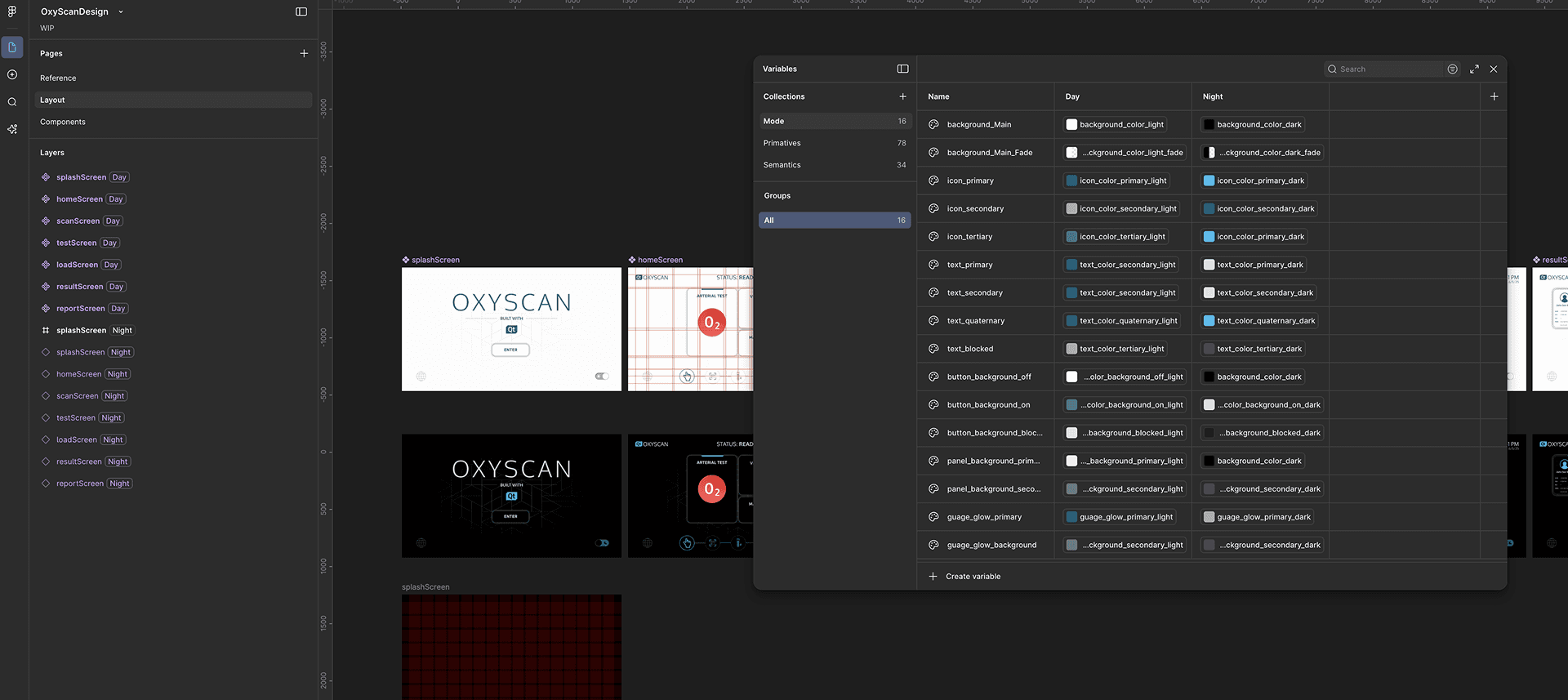
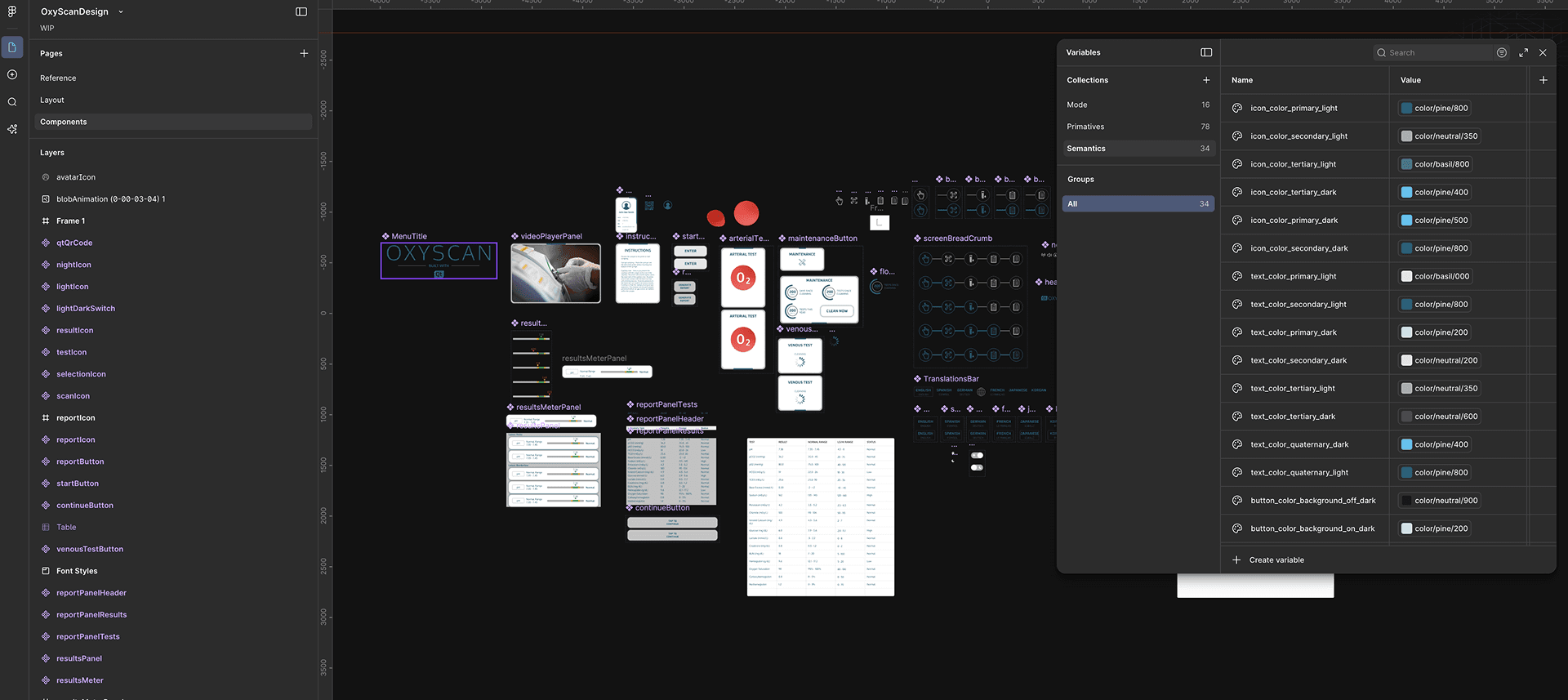
Where Workflow Meets Technology.
From the moment a sample is scanned, to the instant results shown on screen, OxyScan moves with intention. Navigation flows smoothly through stages of collection, processing, and analysis, supported by PathView-driven transitions and contextual feedback.
Multilingual support ensures accessibility across regions. Subtle motion and theming adapt to lighting conditions. Embedded media reinforces understanding. Each layer works together to simulate a clinical environment where clarity is essential and hesitation is costly.
Where Precision Meets Purpose.
OxyScan elevated the conversation around medical HMIs by shifting the focus from isolated device screens to meaningful diagnostic journeys. It demonstrated that advanced rendering, localization, and hardware-conscious design can coexist within a calm, trustworthy interface.
More than a technical showcase, the project positioned Qt as a partner capable of understanding the stakes of healthcare; where design is not flashy visuals, but a contributor to clarity and understanding.